The WhatsApp Message That Changed Everything – “Bro, I’m doing it. Booked a Vietnam Solo Travel for 7 days. Leaving next month.”
Rajesh’s friends reacted exactly as you’d expect. “Alone? Pagal hai kya?” His mother called immediately: “Beta, why alone? Take someone!” His colleagues laughed: “Vietnam? What’s even there?”
Fast forward to Day 3 in Hoi An. Rajesh sits alone at a riverside café, watching hundreds of yellow lanterns float across the Thu Bon River. Vietnamese coffee ₹60, morning cycling through rice paddies, clothes tailored for ₹2,500, and I just made friends with two German solo travellers.
He texts his group: “Guys… I should have done this YEARS ago.”
Total trip cost: ₹34,500 for seven days, including flights. Not seven lakhs. Thirty-four thousand five hundred rupees.
This is Vietnam solo travel for Indians in 2025. Not scary, not complicated. Just surprisingly easy, incredibly affordable, and life-changingly liberating.
Remember when a Vietnam visa meant sending a passport to Delhi, waiting two weeks, and paying ₹6,000? Forget that.
August 2023 changed everything. Vietnam added India to the visa-free list. Forty-five days. No application. No fees. Zero paperwork.
You land at Hanoi/HCMC/Da Nang. Join the “Visa Exempt” queue. Show passport, return ticket, and hotel booking. Officer stamps passport. Done. Fifteen minutes maximum.
Priya from Mumbai told me she’d printed ten documents, rehearsed answers, and carried extra photos. “The officer literally just stamped and waved me through. I felt stupid with all that paperwork!”
This saves ₹2,100 on visa fees and eliminates the “waiting for passport” stress. That spontaneous “let’s go next week” Vietnam trip? Actually possible now.
Just ensure the passport has six months’ validity. Have a return ticket proof ready—they sometimes check.
“Bhai, kitna kharcha hoga?”
Amit from Pune expected ₹60,000. He spent ₹34,200. Private rooms (not dorms), restaurants, and taxis via Grab.
His actual breakdown:
For comparison: Dubai, same week? ₹68,000 for five days. Bali? Starting at ₹55,000 for six days.
Vietnam isn’t just cheap. It’s genuinely affordable in a way that makes solo travel financially sensible instead of reckless.
Vietnamese culture centres around family, respect for elders, and communal eating. Sound familiar? Taking shoes off before entering? Normal. Street food chaos? Like Chandni Chowk. Haggling? Same energy as Sarojini Nagar.
But here’s what matters for solo travellers: Vietnam is safe without being boring.
Amit told me about his third night in Hanoi. Walking Old Quarter past 10 PM—something he’d never do in unfamiliar Indian areas—just exploring. Found a bia hoi corner (sidewalk beer) where locals waved him over. No English, just Google Translate and laughter. Fresh beer ₹40, grilled pork, motorbikes zooming past.
“That moment when I realised I could just exist in a foreign city alone at night without fear—that’s when I understood solo travel.”
For solo female travellers specifically—I’ve spoken to 15+ Indian women who’ve done Vietnam solo—the consensus is striking. Priya: “Safer than Mumbai at night.” Neha: “Men were respectful, not creepy.” Anjali: “Hoi An felt safer than my Hyderabad neighbourhood.”
Ravi’s panic: “Bro, I’m pure veg. Will I survive or pack Maggi?”
Day 1 Hanoi: Find “Quán Ăn Chay” (vegetarian restaurant) near the hotel. Buddhist vegetarian, no fish sauce, ₹150 unlimited buffet. Day 2: Discovers pho chay (vegetarian pho with tofu) everywhere. Day 3: Spring rolls are naturally vegetarian. Day 4: Bánh mì chay (vegetarian sandwich) ₹60.
By Day 5: “Why did I panic? I’m eating better than Bangalore.”
Vietnam has a strong Buddhist vegetarian tradition. Every city has “Quán Ăn Chay” restaurants near temples. You get rice, vegetables, tofu, mock meat, and soup. Guaranteed vegetarian, no English needed (point), insanely cheap (₹120-200).
Learn this: “Tôi ăn chay” (Toy an chai) = “I eat vegetarian.” Write on phone, show vendors.
Street food options: Bánh mì chay (₹50-80), gỏi cuốn (spring rolls ₹100-150), phở chay (₹120-180), fresh fruit everywhere (₹50-100).
Ho Chi Minh City has most options—even Indian restaurants (Baba’s Kitchen, Ganesh) for desperate dal makhani cravings.
One warning: Fish sauce is the default seasoning. Always specify “không nước mắm” (no fish sauce).
Everyone does the same route: Hanoi → Ha Long Bay → Hoi An → HCMC. Seven to ten days. It’s “default” for a reason—it works perfectly for first-timers.
First impression: Chaotic motorbikes everywhere, constant honking, life-threatening road crossings.
Day 2: Wait, this is charming? The chaos has rhythm. Old Quarter’s maze is the activity. Coffee culture is serious—tiny plastic chairs, strong coffee, hours of people-watching.
Day 3: I love this city. Why am I leaving?
Solo advantage: The Hostel scene is incredible. Vietnam Backpackers Hostel runs nightly pub crawls. Arrive solo, make ten friends by night three.
Actually do: Wander Old Quarter at different times. Cooking class (₹1,800). Day trip to Ha Long Bay (₹3,500-4,500, mandatory). Egg coffee at Café Giang (₹90, life-changing).
If Hanoi is chaos, Hoi An is calm. UNESCO ancient town with hundreds of silk lanterns lighting up yellow at sunset. Almost absurdly beautiful.
Anjali: “I’m not a crier. But sitting by that river at sunset, watching lanterns float, completely at peace alone—I teared up. Happy tears.”
Solo travel works differently here. Hostels for partying, Hoi An guesthouses for reflecting. Rent a bicycle (₹100/day), cycle to An Bang Beach through rice paddies. Cooking class. Get clothes tailored (two shirts, one dress, perfectly measured: ₹4,000).
Safety note: Hoi An is Vietnam’s safest city for solo women. Family guesthouses, minimal harassment, well-lit streets. If nervous about solo travel, start here.
HCMC is Vietnam’s Bangkok—modern, fast-paced, with rooftop bars, international restaurants. Pham Ngu Lao backpacker area hosts dozens of hostels where solo travellers from 40 countries constantly mix.
Ravi: “In HCMC, I stopped feeling ‘alone’ and started feeling ‘independent.’ Subtle difference, huge impact.”
Must-do: War Remnants Museum (₹180, heavy but important, budget two hours). Cu Chi Tunnels half-day tour (₹1,500). Ben Thanh Market shopping (haggle aggressively). Nguyen Hue Walking Street evening strolls.
Vegetarian win: Multiple dedicated vegetarian restaurants plus actual Indian restaurants. After days of Vietnamese food, nothing hits like paneer tikka.
Neha’s biggest anxiety: “How will I navigate transportation without speaking the language?”
Day 1 Hanoi: Download the Grab app. Problem solved.
Grab (Southeast Asia’s Uber) works flawlessly. Open app, type destination, exact price shown before booking, driver arrives GPS-tracked, pay through app. No negotiation required, zero scams, zero communication needed.
Costs:
Between cities:
Flights (fastest): Hanoi-Da Nang ₹3,500-5,500 (1hr 15min). Book VietJet Air or Vietnam Airlines 2-3 weeks in advance to save ₹2,000+ per flight.
Trains (scenic, social): Sleeper trains offer overnight savings on hotel costs. Hanoi-Hue 12 hrs, ₹1,200-1,800. Meet travellers, share snacks. Book via Baolau.com.
Buses (cheapest): The Sinh Tourist, Futa Bus. Hanoi-Sapa 6 hrs, ₹800.
First-timers: Flights for major jumps (saves time), trains for one overnight (experience), and grab local transport.
Warning: Vietnamese traffic is terrifying but organised chaos. When crossing streets, walk slowly and steadily. Motorbikes flow around you like water. Don’t stop suddenly.
Amit withdrew at Hanoi airport. The screen showed: “5,000,000 VND or 8,000,000 VND?”
Panic: “FIVE MILLION?! How much is that?!”
His ₹18,000 became 5,000,000 Vietnamese Dong. Oh.
Vietnamese Dong has SO MANY ZEROS. Quick conversion: Divide VND by 300 for rough rupees.
150,000 VND = ₹500
60,000 VND = ₹200
Notes you’ll use:
500,000 VND (blue) = ₹1,800
200,000 VND (brown) = ₹720
100,000 VND (green) = ₹360
50,000 VND (pink) = ₹180
20,000 VND (blue) = ₹72
Polymer notes stick together (they’re plastic). ALWAYS fan them out before counting. You’ll accidentally hand over two notes thinking it’s one.
Best strategy:
Airport: Exchange only ₹5,000-8,000 (taxi, SIM, first meal)
City: Next day, gold shops (Ha Trung Street, Hanoi, Kim Mai HCMC) give the best rates—better than banks! Exchange ₹30,000-40,000 here
ATM backup: One withdrawal, 8,000,000 VND maximum (saves multiple ₹200 fees)
Vietnam is cash-heavy. Cards work at hotels/malls, but street food/markets want cash. Carry 500,000-800,000 VND daily.
Priya’s mom: “Beta, Vietnam alone? What if something happens?”
Priya, after returning: “Mom, I felt safer in Hoi An at midnight than in Bandra at 8 PM.”
What solo women report:
Practical tips:
Actually worry about: Pickpocketing in crowds, phone snatching from motorbikes, taxi scams (use Grab), drink spiking (watch your drink). Standard urban awareness.
Neha: “First 48 hours felt scary because unfamiliar. By day 3, I realised Vietnam is genuinely safe. By day 5, navigating like a local.”
Hostels (₹600-1,000/night dorm): Social, meet people instantly, budget-friendly. Trade-offs: shared bathrooms, noise, and less privacy.
Recommended: Vietnam Backpackers Downtown (Hanoi), Tribee Kinh (Hoi An), Hideout (HCMC).
Budget hotels (₹1,200-2,200/night private): Privacy, quiet, AC, hot water. Trade-offs: more expensive, less social.
My recommendation: Start hostel (first 3 nights, make friends), switch private rooms (last 3-4 nights, recharge). Best of both worlds.
Location matters: Stay within walking distance of main areas. Old Quarter (Hanoi), Ancient Town (Hoi An), District 1 (HCMC).
Day 1: Fly from Hanoi morning. Grab to Old Quarter (₹1,200). Walk around, street food dinner, egg coffee. Early sleep.
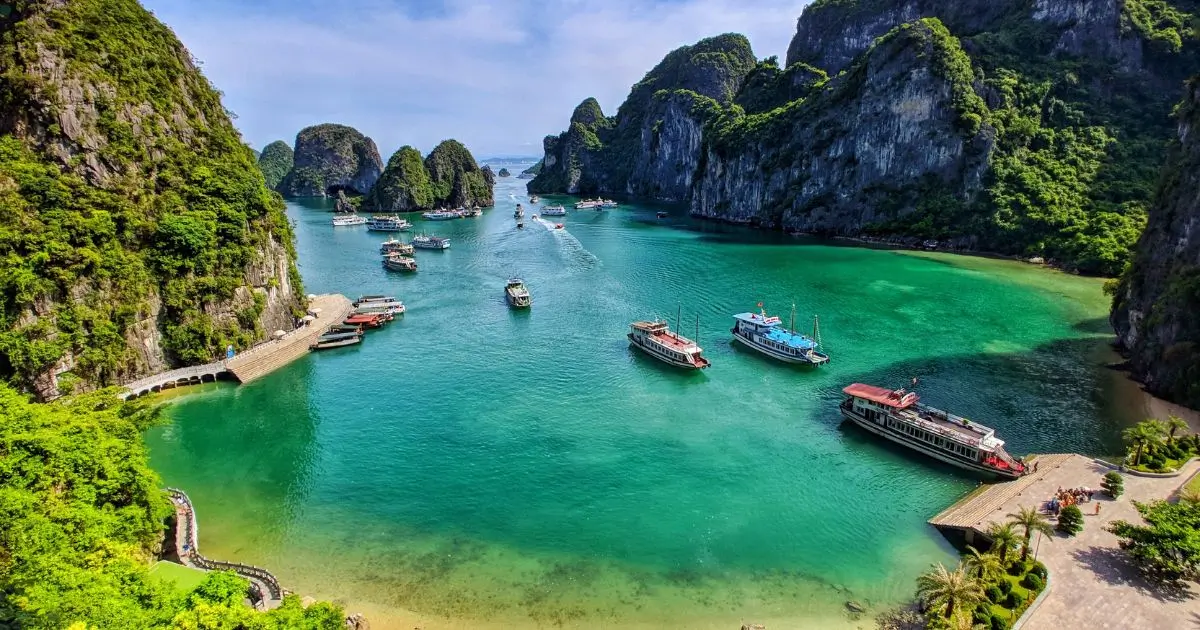
Day 2: Ha Long Bay cruise (book through hostel, ₹3,500-4,500). Leave at 8 AM, return at 8 PM. Kayaking, caves, seafood lunch.
Day 3: Morning: Museum or sleep late. Afternoon: Train Street, Hoan Kiem Lake, shopping. Evening: Water puppet show (₹450). Hostel pub crawl or quiet dinner.
Day 4: Fly Hanoi-Da Nang (₹4,000). Grab to Hoi An (₹900). Wander Ancient Town. Release lantern (₹50), riverside dinner.
Day 5: Rent a bicycle (₹100). Morning: An Bang Beach. Afternoon: Cooking class (₹1,800). Evening: Get measured at the tailor’s. Bánh mì dinner.
Day 6: Morning: Tailor fitting. Afternoon: Fly Da Nang-HCMC (₹4,500). Evening: Nguyen Hue Walking Street, rooftop bar (₹600 drink).
Day 7: Morning: War Remnants Museum (₹180). Lunch: Ben Thanh Market. Afternoon: Cu Chi Tunnels (₹1,500). Evening: Pack, shopping, street food. Night flight home.
Total: ₹33,000-42,000 depending on choices.
Amit returned to Bangalore. Friends: “How was the trip? Show photos!”
He showed Ha Long Bay, Hoi An lanterns, and motorbike chaos. They nodded politely.
What Amit couldn’t photograph:
Morning waking in Hanoi thinking, “I’m actually doing this thing I’ve talked about for years.”
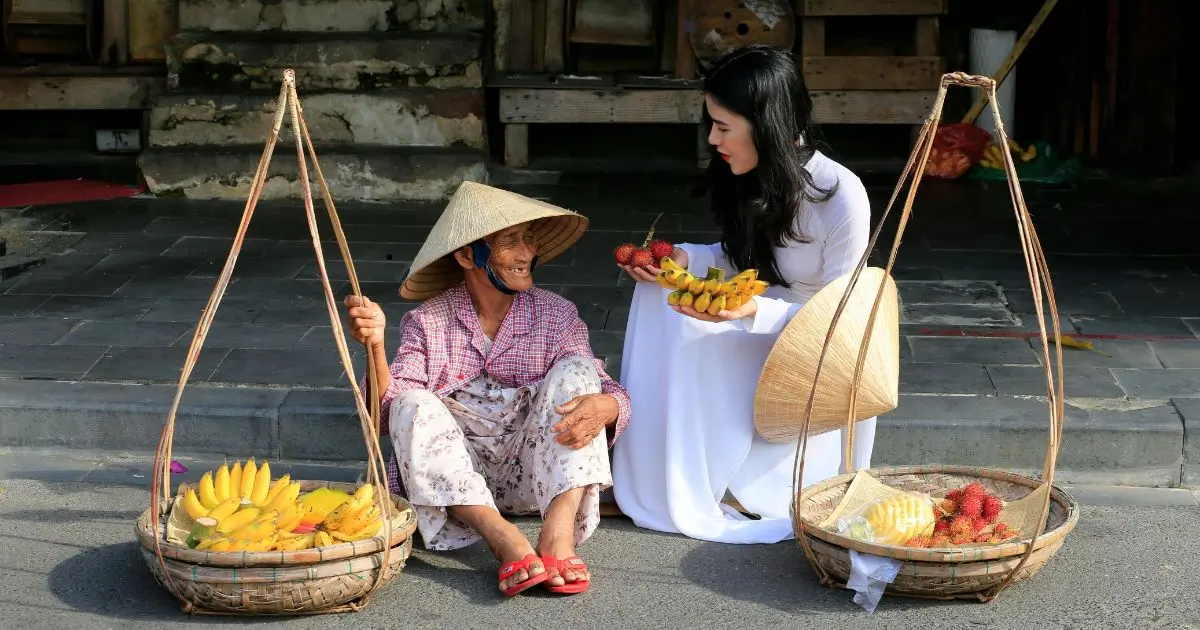
Afternoon in Hoi An, ordering coffee in broken Vietnamese, the vendor understood, laughing kindly.
Evening sitting alone riverside, watching sunset, feeling neither lonely nor needing company—just peaceful.
Realisation flying home: “I can do hard things. Travel alone. Handle unfamiliar situations. I’m more capable than I thought.”
Solo travel changes you. Not dramatically, but gradually, genuinely. You return slightly more confident, slightly more independent, slightly more you.
Your family will still worry. Friends still make excuses. Colleagues still do not understand.
But you’ll know: Vietnam solo travel isn’t a scary adventure for crazy people. It’s just travelling. Alone. In a beautiful, affordable, safe, welcoming country that makes it remarkably easy.
And you’ll start planning your next solo trip. Because once you go solo, everything else feels like a compromise.
Yes, Vietnam ranks among Asia’s safest destinations for solo travellers. Violent crime against tourists extremely rare. Common sense precautions apply: secure valuables in crowds, use Grab instead of street taxis, don’t walk isolated areas late night. Solo female travellers consistently report feeling safer in Vietnam than many Indian cities. Petty theft exists (pickpocketing, phone snatching) but preventable with basic awareness.
Complete 7-day trip costs ₹33,000-49,000 total including flights. Budget breakdown: return flights (₹15,000-22,000), accommodation 6 nights (₹5,000-7,500), food (₹4,500-6,500), transport (₹3,500-5,000), activities (₹3,500-5,500), miscellaneous (₹1,500-2,500). Budget travellers staying hostels, eating street food spend ₹33,000. Mid-range with private rooms, restaurants spend ₹42,000-49,000. Significantly cheaper than Thailand, Singapore, or Bali.
Yes, vegetarian food available throughout Vietnam due to Buddhist tradition. Every city has “Quán Ăn Chay” (vegetarian restaurants) serving 100% vegetarian meals without fish sauce for ₹120-200. Learn phrase “Tôi ăn chay” (I eat vegetarian). Safe options: pho chay (vegetarian pho ₹120-180), bánh mì chay (vegetarian sandwich ₹50-80), spring rolls (₹100-150), fresh fruit. Ho Chi Minh City has dedicated vegetarian restaurants plus Indian restaurants for emergencies.
No visa required for Vietnam as of 2025. India on Vietnam’s visa-free country list allowing 45 days stay for tourism. Simply arrive at Hanoi, HCMC, or Da Nang airports with passport valid 6 months, return ticket, hotel booking proof. Immigration stamps 45-day permit free. Policy confirmed through December 2025. For stays longer than 45 days, apply for 90-day e-visa before departure costing $25 (₹2,100).
Best areas: Hanoi Old Quarter (compact, social hostels, authentic), Ho Chi Minh City District 1 especially Pham Ngu Lao (backpacker hub, budget options), Hoi An Ancient Town (safest city, family guesthouses). Stay hostels like Vietnam Backpackers (Hanoi), Tribee Kinh (Hoi An), Hideout (HCMC) for social atmosphere. Budget ₹600-1,000 dorm beds, ₹1,200-2,200 private budget rooms. Read recent reviews from solo travellers before booking.
Yes, Grab app safest and most reliable transport option in Vietnam. Shows exact price before booking, GPS tracked entire journey, cashless payment option, driver ratings visible. Eliminates common taxi scams (meter manipulation, fake taxis, overcharging). Download before arriving Vietnam. Typical costs: airport to city ₹900-1,500, short 3km ride ₹300-400, 10km ride ₹700-900. Available Hanoi, HCMC, Da Nang, Hoi An. Alternative: Xanh SM electric taxis slightly cheaper.
Pack light—40L backpack maximum (cobblestone streets difficult with suitcases). Essentials: quick-dry clothes (humid climate), modest temple outfit (covered shoulders/knees), flip-flops, broken-in walking shoes, rain jacket, power bank (10,000mAh), universal adapter (Type A/C plugs), microfiber towel, basic first aid (Imodium, Paracetamol, ORS), padlock for hostel lockers, passport photocopies. Leave copies documents with family. Vietnam has laundry services everywhere (₹150-300/kg) so don’t overpack clothes.
Stay hostels first 2-3 nights (instant social interaction, common areas, organized activities). Join free walking tours, cooking classes, day tours where you meet other solo travellers. Use hostel pub crawls, group dinners. Video call home when feeling isolated. Journal experiences. Follow solo travel Instagram accounts. Remember lonely moments temporary (usually first 48 hours), solo travel confidence permanent. Most solo travellers report 2-3 genuinely lonely evenings across 7-10 day trips, outweighed by freedom and self-discovery.
Yes, perfectly manageable without Vietnamese. Major tourist cities (Hanoi, HCMC, Hoi An, Da Nang) have English-speaking staff at hotels, restaurants, tour operators. Download Google Translate with offline Vietnamese dictionary. Learn essential phrases: hello (xin chào), thank you (cảm ơn), how much (bao nhiêu). Use Grab app for transport eliminating language barrier. Point at menu photos ordering food. Vietnamese people generally patient, helpful with tourists. Many solo travellers navigate Vietnam successfully knowing zero Vietnamese initially.
Best time March-April or October-November offering optimal weather across Vietnam, fewer crowds than peak December-February, reasonable accommodation prices. Avoid June-September for Central Vietnam (heavy rains, floods). Avoid December-January for North Vietnam (cold, misty especially Ha Long Bay). South Vietnam (HCMC, Mekong) best December-April dry season. Solo travellers have flexibility advantage—book last-minute based on weather forecasts, take advantage off-season deals (20-30% cheaper accommodation).
Eccentric Blogger, Traveler and Consultant.

Prices and visa policies reflect December 2025 information and subject to change. Individual travel experiences vary. This guide provides general recommendations based on traveller reports, not professional advice. Always verify current visa requirements, purchase travel insurance, prioritise personal safety. Author and Mast Yatri not liable for policy changes, price fluctuations, or individual experiences.